
Project synopsis
Online students struggle to make meaningful connections when studying online. An increased sense of connection is associated with student success and retention.
Deakin Buddies aimed to improve the connection between online students at Deakin University by creating a digital platform that helps enable this connection. We tested and validated need through a series of smaller trials involving students signing up through a simple web form where we then manually matched students (behind the curtain, so to speak).
To scale this tool, we needed to develop a self-serviceable platform that could work for all 60,000+ students studying at Deakin University. Our early tests also allowed us to evaluate what user stories mattered most for our students so we could create an impactful product.
My involvement
In this project, I was the design and development lead, while my colleague Meredith took on the internal stakeholder management component, and elements of the evaluation. I was responsible for scoping and prioritising user stories, designing the experience and flow, and testing and validating with students.
It was my responsibility to ensure the product was delivered on time and on budget, and met our objectives of increasing students’ sense of connection.
Discover
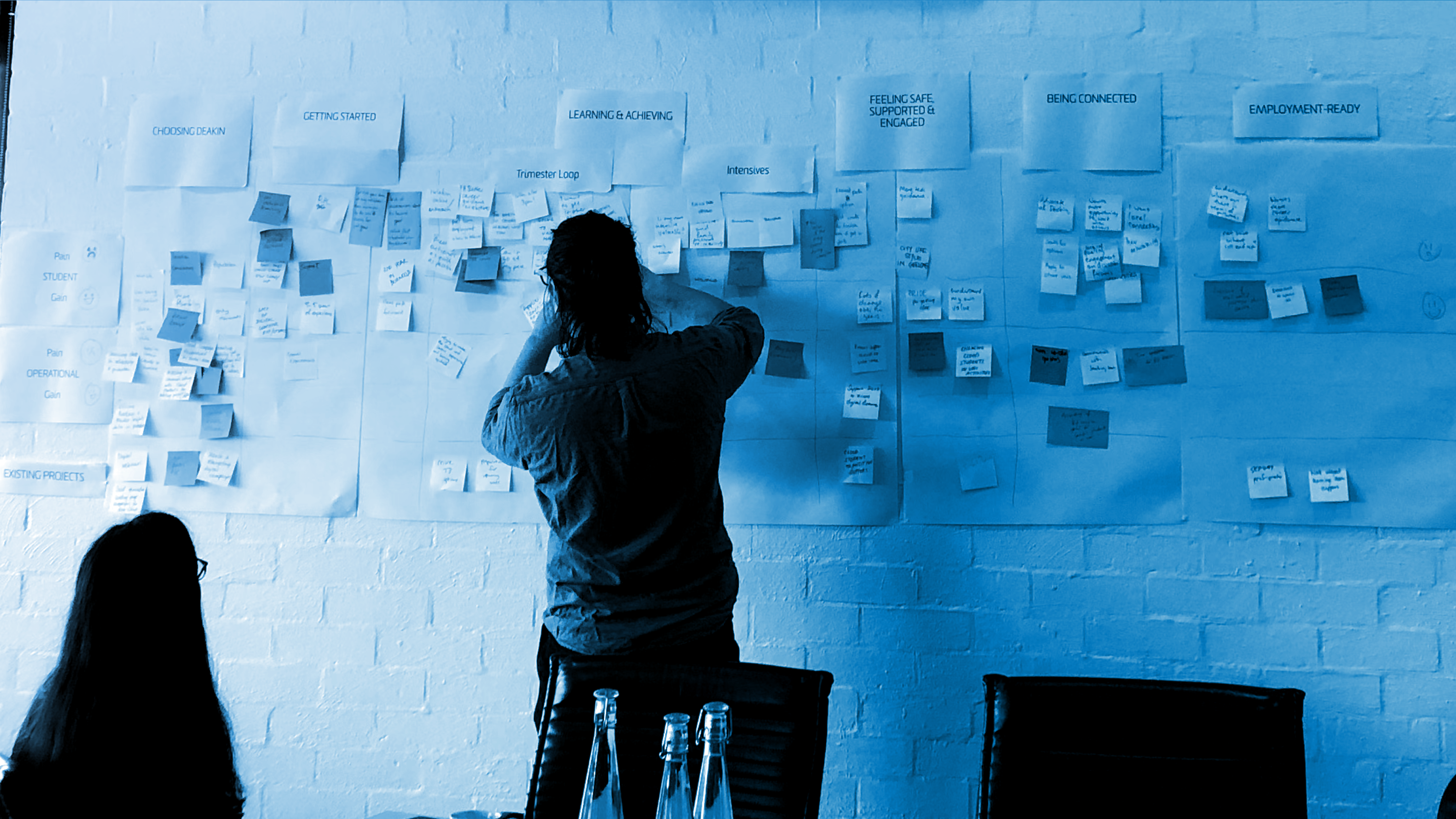
Internal reports such as student eValuate and student satisfaction reports identified connection as a critical component and pain point in the online student experience. Through interviewing our online students, I was able to determine the key factors that influenced connection and formed, prioritised and validated ideas to address this. Being online, generally, the students were older, more likely studying part-time, balancing work/life and family and had already commenced a career. These factors and the isolation from the physical campus meant their needs and desires for connection were unique when compared to on-campus students. Although potentially beneficial for all students, those factors determined our pilot audience should be online students only.
Given we had validated this concept in some earlier lo-fi trials, we had extensive user feedback to inform the development and prioritisation of our user stories. For example, we discovered that when students successfully matched, they would not take action because both students were expecting the other to make first contact. To solve this, I created a 'contact your match' step on accepting each request.
Define
Like most universities, Deakin has a robust eco-system of tools and systems throughout the student experience. Generally, the learning experience is focused primarily on the unit experience, which means opportunities to connect with students beyond units is limited. There was no specific place to meet students beyond their unit discussion forums, or more public forums like the Cloud Campus Facebook group. Another limitation of unit-based connection is that it is often study-oriented, whereas through our student interviews and early pilots it was revealed students did not just want to connect for ‘study’ reasons, but for a more general sense of camaraderie, mentoring or even just friendship.
Interviews, surveys and evaluation all revealed students have their own preferred existing platforms to communicate through, such as Facebook Messenger or WhatsApp. There are also other internal communication platforms within Deakin's ecosystem, such as Microsoft Teams and discussion forums. Given this, adding another communication platform to an already complex environment would potentially be detrimental to the student experience. We defined Deakin Buddies to specifically focus on the initial 'matching' and 'introduction' component of connection, which was not being served by the current ecosystem. This simplified the delivery, experience and scope of the project while still meeting students' needs. This also gave us room to further validate and add features on each iteration in a lean user-centric way.
Develop
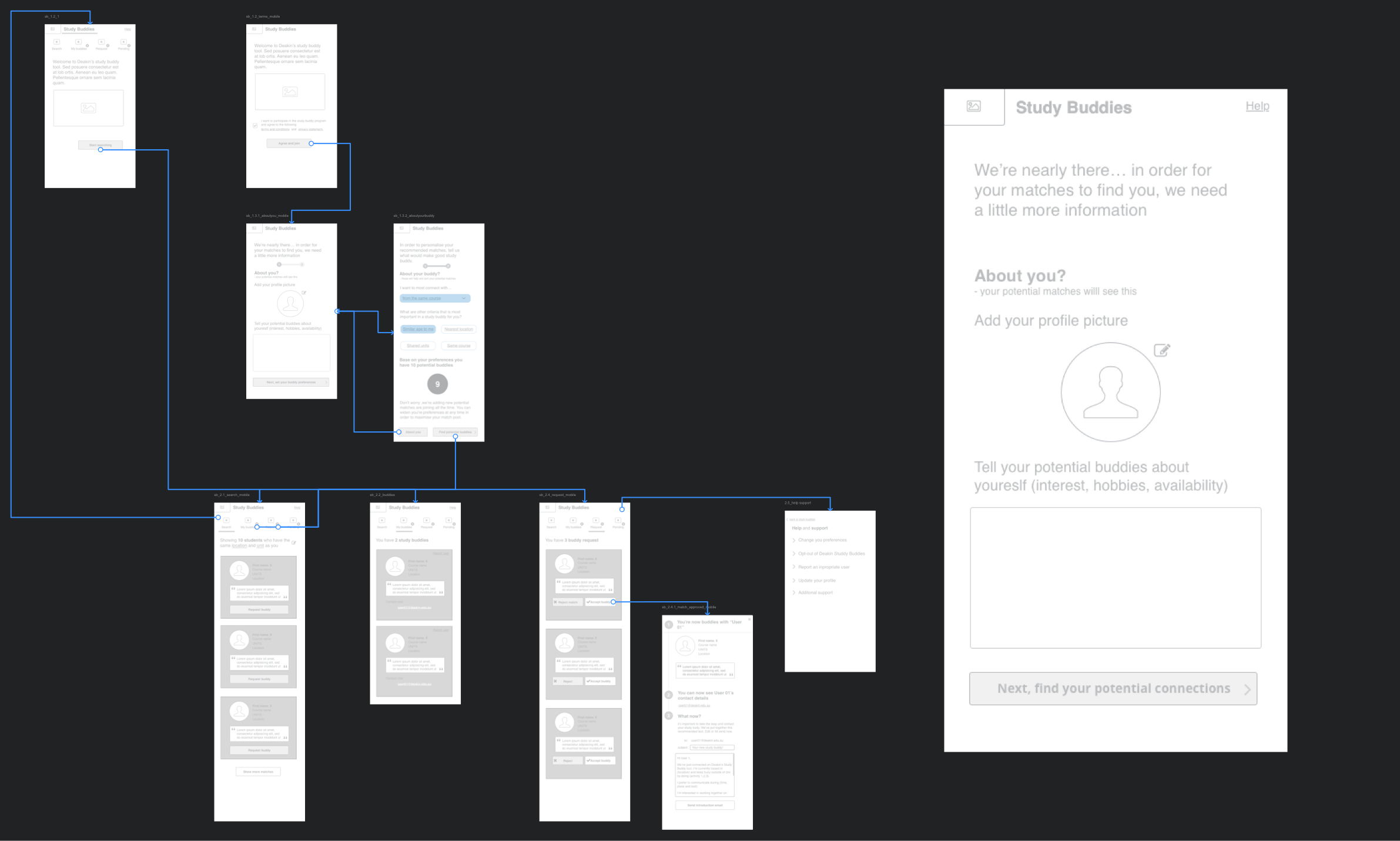
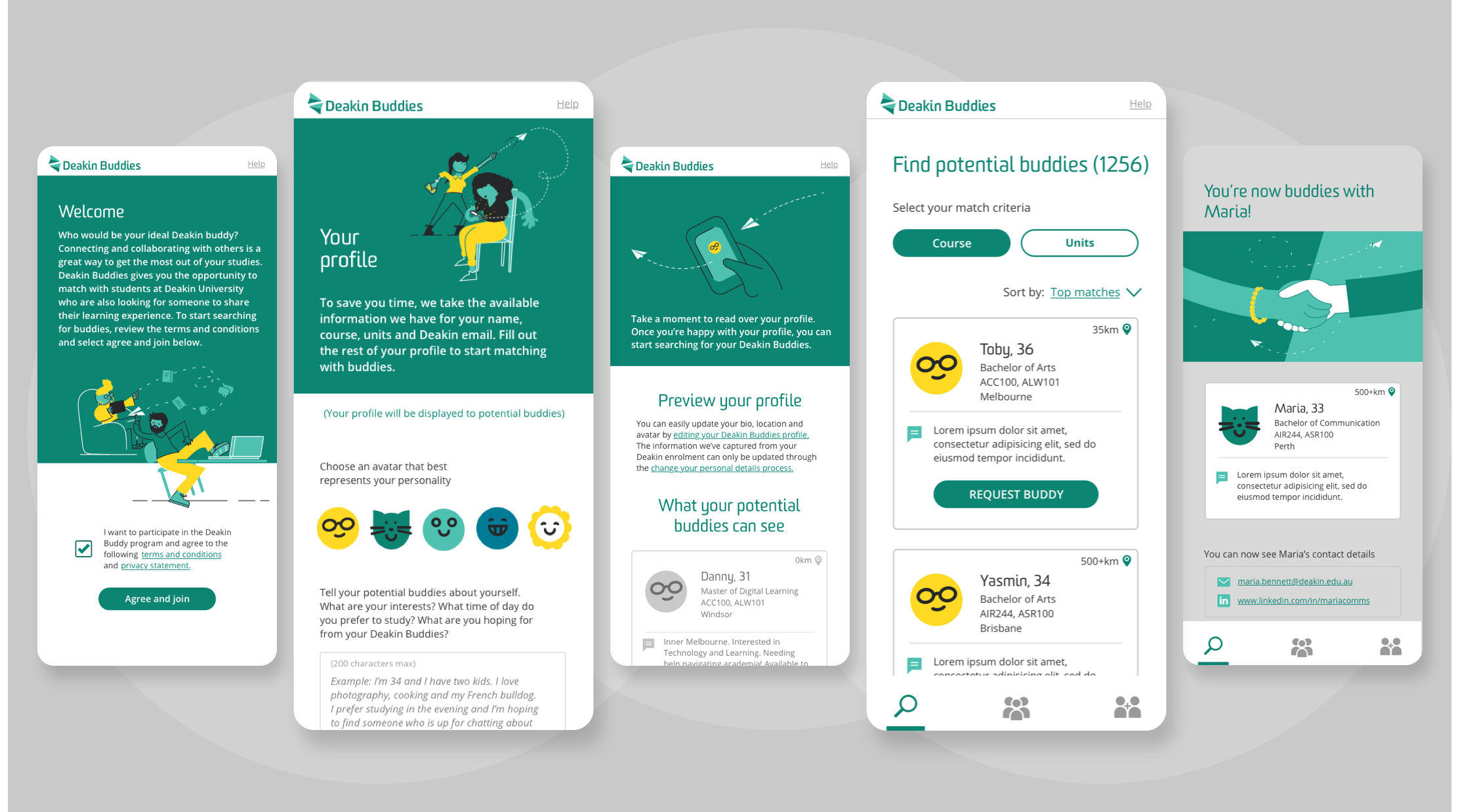
I produced high-fidelity designs for mobile and desktop using Sketch, and further developed this into a semi-interactive prototype in InVision. This allowed me to test the product with users pre-build to ensure the experience was as seamless as possible and appealing for our end users. At this stage, several smaller tweaks were made to the tone, content, functionality and visuals, but most importantly it validated the initial scope of the product.
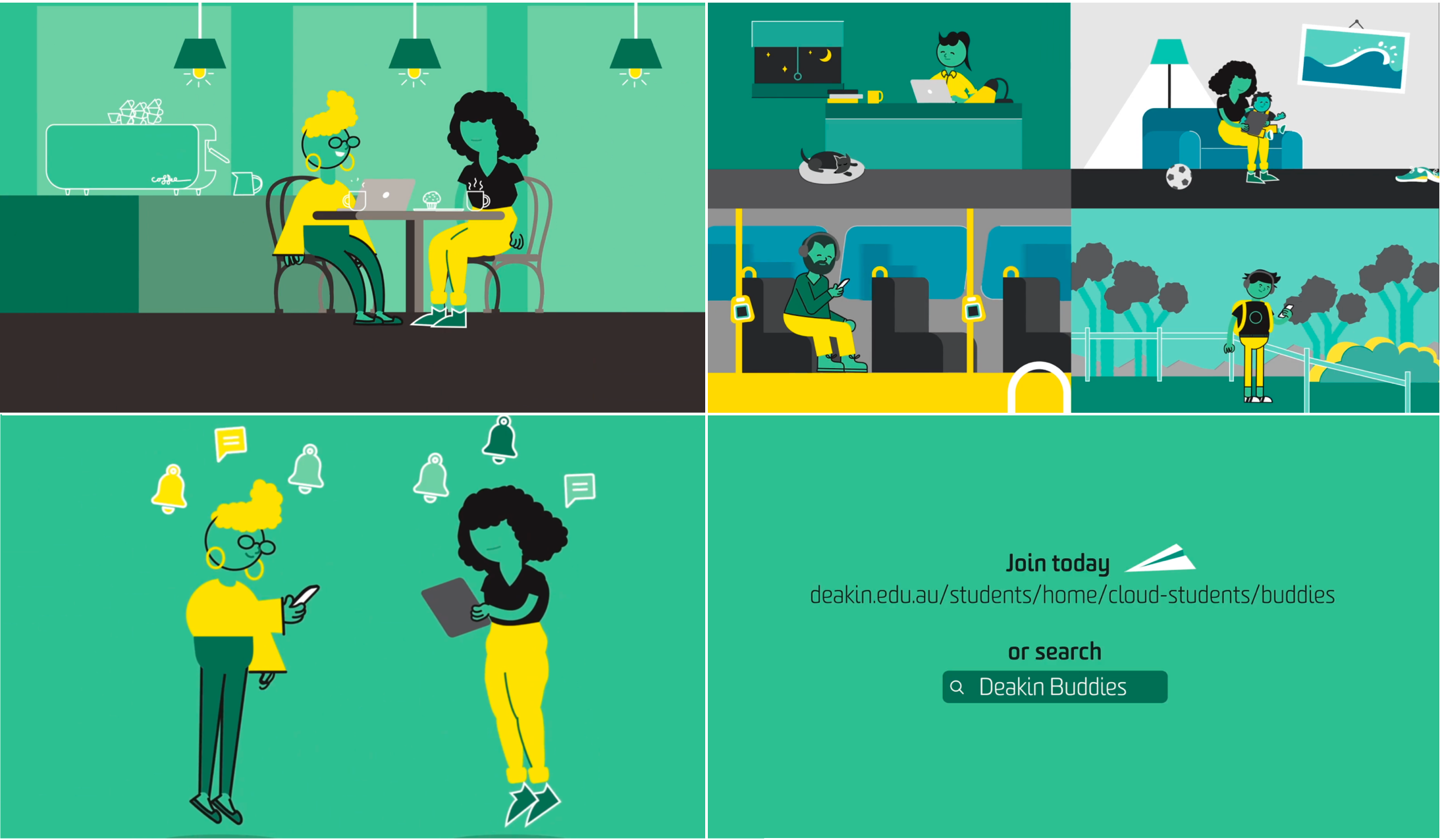
I exported the final designs to Zepplin for our developer to commence the build. It was my responsibility to manage this. Alongside the build, we were able to focus on the communications associated with the initial pilot of the tool, which included a student landing page and promotional animation.
I managed the testing of the build, which involved taking users and staff through experience, writing testing guides and capturing, compiling and prioritising the feedback for development.
Deliver
In Trimester 3 2020, we piloted the tool with our online cohort and we had good engagement and positive feedback. The insights and the data from the in-app experiences further validated the need to scale the product and deliver to a larger student cohort, given that a higher user base would create a better pool of matches for students and therefore increase the impact of the product.
When COVID-19 hit, the need for disrupted students working from home to connect with other students meant we needed to deliver the product to all students, not just our traditional online cohort. Given our robust testing and user-centric approach to developing the tool, we were able to quickly pivot and deploy the tool for all 60,000+ students at Deakin University.
Impact
The tool was utilised by 799 users.
Students using the platform sent 1,876 match request.
For every match request sent, 51% of the requests were accepted.